AI Lesson Planning Software for Philippine K-12 Teachers: NextGuro Case Study
How we built and shipped NextGuro — a DepEd-aligned AI lesson planner for K-12 teachers across the Philippines — from idea to paying customers in under 90 days.
The problem
Teachers in the Philippines spend Sunday nights — sometimes four hours of them — building lesson plans for the week ahead. The Department of Education mandates a strict format and frequent revisions to that format are part of the job. Generic ChatGPT outputs don’t pass administrator review because they ignore the format, the MATATAG curriculum alignment, and now the disclosure rules that come with AI use.
When DepEd Order 3, Series 2026 introduced the new ILAW format — Intentions, Learning experiences, Assessment, and Ways forward — every teacher in the country had to relearn how to structure a plan overnight. The market needed a tool that produced administrator-ready ILAW plans from a single topic prompt.
What we built
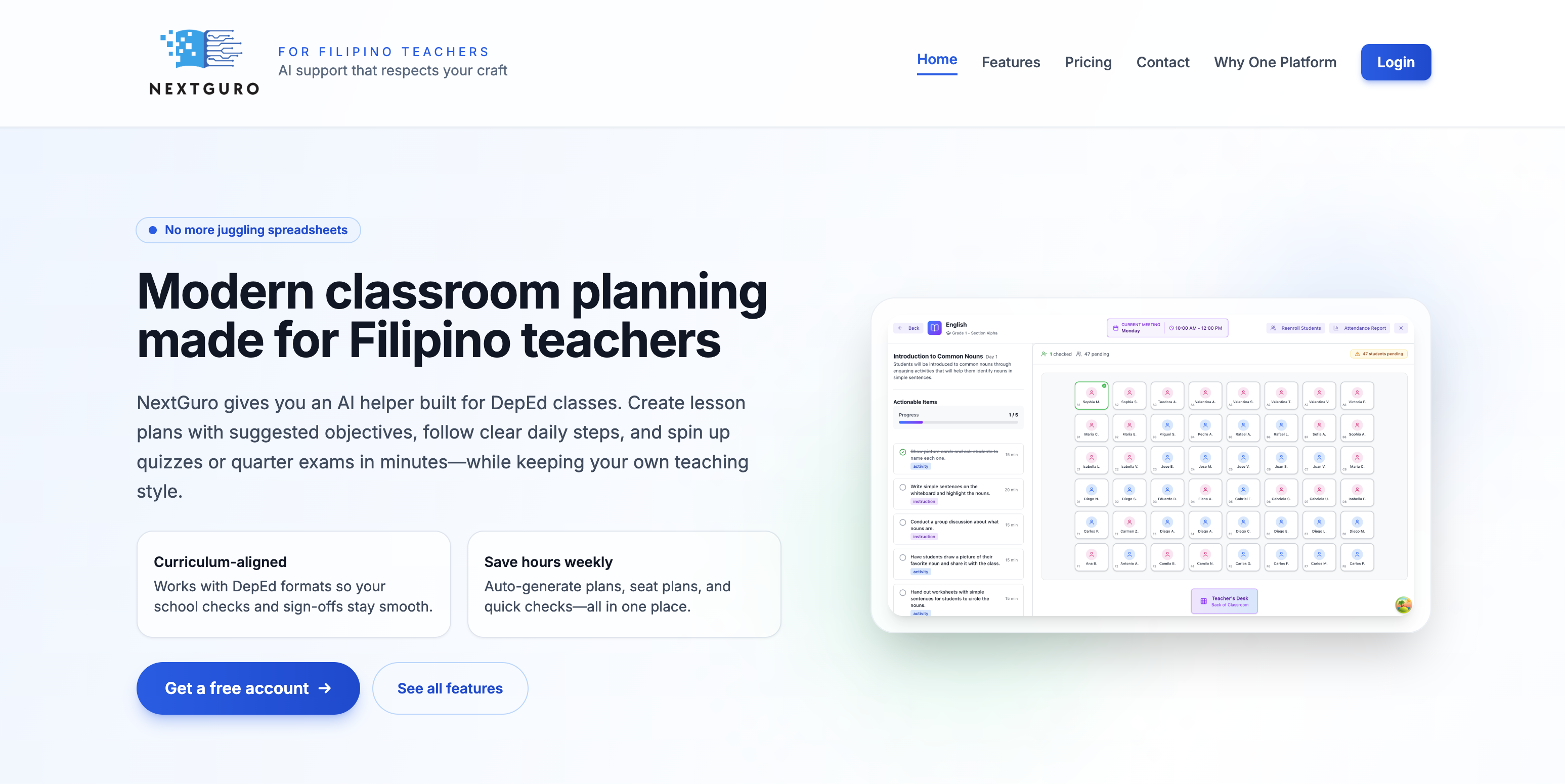
A focused SaaS: type the lesson topic, grade level, and curriculum code. NextGuro generates a full ILAW plan with intentions written to Bloom’s taxonomy, structured learning experiences with timing, aligned assessment questions, ways-forward guidance for follow-up, and a downloadable PowerPoint deck with appropriate visuals.
Two things matter for compliance. The platform is ILAW and MATATAG ready out of the box, meaning what comes out passes administrator review without manual reformatting. And every generated plan includes the required Declaration of AI Use that DepEd policy now mandates, so teachers aren’t quietly using AI in violation of the rules they’re being asked to follow.
The teacher edits as needed and brings it to class the next morning.
Architecture decisions that mattered
A mature backend over an experimental one. The product is mostly SaaS plumbing (auth, billing, admin, team management) with AI generation as a focused feature on top. Choosing a mature, boring backend let us ship the plumbing fast and treat the AI part as the deliberate piece, not the whole project.
Background generation with progress polling. LLM generation takes several seconds. Foreground requests at that latency are a UX disaster. We enqueue immediately, show a progress indicator, and surface the result the moment it’s ready.
Paid from day one. No free tier. Charging on launch day meant the users who signed up actually wanted the product. We picked a billing platform with a customer portal so plan changes, refunds, and payment retries don’t sit on the founder’s plate.
Results
- Active paying user base growing through word of mouth and referrals
- Low-overhead operation thanks to disciplined scope and the right stack choices
- Support load light enough to be handled by the founder day-to-day
- Zero churn-causing production incidents since shortly after launch
What we learned (and got into our methodology)
Narrow wedges win in word-of-mouth markets. “Lesson planner for teachers” wouldn’t have worked. “ILAW and MATATAG-ready plan generator for Philippine K-12, with the required AI use declaration” did, because it solved a specific format problem perfectly the moment DepEd mandated the change. Sharp wedges travel.
Eval harness as production infrastructure. We caught a regression in month four where a prompt change made objectives too short. The fix was easy. The lesson was that LLM quality drifts silently without an eval — we now build eval harnesses on every client AI project.
Ship the boring stuff first. Auth, billing, refunds, password reset, admin impersonation — all built before any AI prompt was written. Founders who skip this end up debugging payment webhooks during their first viral moment.
Who NextGuro serves
K-12 teachers across the Philippines — both DepEd public-school teachers and educators at private Philippine schools. The product is built around the current DepEd-mandated lesson-plan format and curriculum alignment, with the required AI-use declaration generated automatically. Schools and districts that want a centralized seat-management view for their teaching staff are supported too.
Stack
Built on a mature Ruby backend with a managed Postgres database and a hosted LLM provider for generation. We use boring, proven infrastructure rather than the framework-of-the-month.
Visit the live product at nextguro.com.
For the longer view on the build-vs-buy decision behind this kind of project, see our build vs buy guide.